By Gabe Salinas, Founder of Window Ninjas
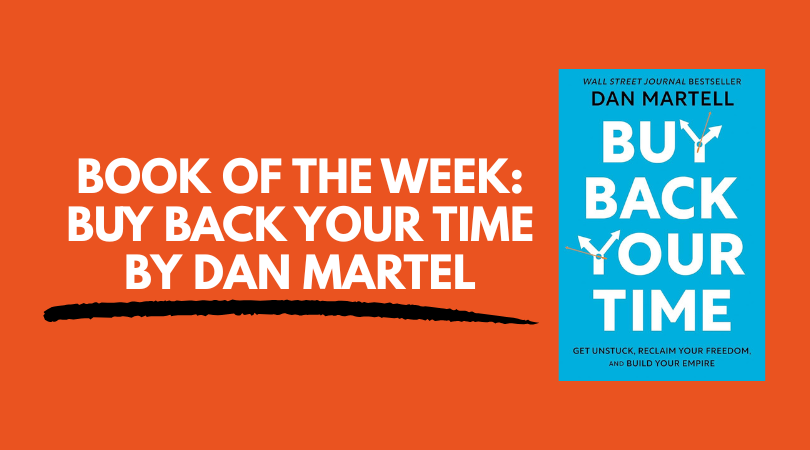
Are you running your business, or is your business running you into the ground? If you’ve ever felt like a prisoner in the very company you built to set yourself free, then you know exactly what I’m talking about. Some books you read once and put on the shelf. Others, the truly great ones, become part of your toolkit. Dan Martell’s Buy Back Your Time is not a book; it’s an operating system for entrepreneurs, and it’s one I find myself rebooting on a weekly basis. Dan’s knowledge and insights are utterly amazing. And as I find myself going back to the book, I find more depth in his writings and knowledge. It’s a masterclass in how to stop being an employee in your own company and start being the architect of the life you’ve always wanted to live.
Your Calendar Isn’t a To-Do List, It’s Fort Knox

Time management and scheduling concept with calendar, checklist, and task planning for productivity, project management, deadline tracking, and efficient organization of daily activities.
What is your single most valuable, non-renewable asset? It’s not money. It’s time. So why do we let everyone else steal it from us? Let’s start with the most fundamental and painful truth every business owner faces: we are drowning in tasks. We wear every hat, spin every plate, and at the end of the day, we’re exhausted, wondering where the time went. Martell’s first lesson is where the revolution begins: your calendar.
His input on the calendar is gold and should be guarded as such. For most people, a calendar is a reactive tool, a place where other people’s priorities land. Martell teaches you to see it as your most valuable asset, the fortress that protects your freedom. He introduces a simple but profound concept called the “Buyback Rate.” You figure out what an hour of your time is truly worth based on your income goals. If your goal is a $400,000 salary, your time is worth $200 an hour. The rule then becomes brutally simple: you are forbidden from doing any task you can pay someone else less than $200 an hour to do.
When I first did this exercise, it was a punch to the gut. The amount of $25-an-hour work I was doing was staggering. Booking my own travel, fiddling with social media posts, responding to basic customer inquiries. It was all time theft, and I was the one committing the crime against myself. Your calendar must become Fort Knox. You are the guard, and it is your job to decide what gets in and what stays out. That simple mindset shift is the first step toward reclaiming your life.
The “Who, Not How” Revolution
What’s the one question that keeps great entrepreneurs trapped and prevents them from scaling? It’s a simple one: “How can I do this?” The solution, of course, is to get things off your plate. This leads to the most important mental switch an entrepreneur can make. We are problem solvers by nature. When a challenge arises, our brain immediately jumps to “How can I fix this?” Martell drills into you that this is the wrong question. The right question is, “Who can fix this for me?”
This is the psychological hurdle where most founders stumble. We believe the lie that no one can do it as well, as fast, or with as much care as we can. We are the bottleneck. Shifting from “how” to “who” is an act of trust. It’s an admission that you cannot, and should not, do everything. It’s the moment you decide to become a leader who empowers others instead of a doer who hoards tasks. But finding a “who” is meaningless if you don’t give them the tools to win.
The Playbook: This is Where the Money Is Made
You’ve found the perfect person for the job, so why are you still disappointed with the results? The problem isn’t your “who,” it’s your “what.” Man, this is money. The concept of building playbooks is the most tactical and valuable part of Martell’s system, and it’s something we live and breathe at Window Ninjas. You cannot delegate effectively without a clear plan. An employee without a playbook is just guessing, and that wastes everyone’s time and your cash.
At Window Ninjas, each leader of a department gets a playbook, just like every athlete gets from their coach. It’s not about micromanagement; it’s the exact opposite. It’s about providing absolute clarity on the rules of the game, the objectives, and the “Definition of Done” so they can go out on the field and execute with confidence and autonomy.
Our playbooks are living documents that contain:
Step-by-Step Checklists: From how to answer the phone with a smile in your voice, to the precise 12-step process for a perfect window cleaning, to the final quality check before leaving a customer’s property. There is no ambiguity.
Video SOPs (Standard Operating Procedures): We use Loom to record ourselves doing a task perfectly one time. This 5-minute video can then train every new hire for years to come, saving hundreds of hours in repetitive, hands-on training. It’s Martell’s D.R.E.A.M. framework in action.
Scripts and Scenarios: What’s the right way to handle an upsell? How do you respond to a complaint? We provide the language to empower our team to handle 99% of situations without escalating to a manager.
Building these playbooks is high-value work. It’s the time you spend sharpening the axe so your team can cut down the tree. It’s how you clone your best practices and scale your culture.
Trust, But Verify: The Power of the “Pop-In”
How can you be sure the systems you’ve built are actually working without becoming a dreaded micromanager? It all comes down to the “pop-in.” You can have the best people and the best playbooks, but it all falls apart without one final ingredient: verification. I literally had a conversation with one of my franchisees this week about his team. He called me, frustrated. He thought they were slacking and not doing things the way he wanted them to.
My first question to him was simple: “How often do you pop in on them? Unannounced, just to see them in action?”
You could literally see the lightbulb go on inside his head. It was a true “aha” moment. He was managing from his office, looking at reports, but he wasn’t on the ground seeing the systems at work. He called me the next day, energized. He had spent the morning popping in on a few job sites. He saw his team executing the playbook, delighting customers, and doing fantastic work. The simple act of verification replaced his anxiety with confidence. It reinforced the value of his presence, not as a micromanager, but as an engaged leader.
My Golden Squeegee Rating

5 out of 5 Golden Squeegees!
So, is this book just another collection of good ideas, or is it a blueprint for a new life? For me, it was the blueprint. This book is a must-read for every business owner or entrepreneur. It’s not about theory; it’s a tactical guide to building a business that serves you, not the other way around. It will help you build the life you dream of, and the one you will love, as opposed to being frustrated and unhappy while you’re dreaming of being somewhere else.
Pick it up. You can thank me later.
Keep Shining!
