Are You Building Momentum… or Slowly Losing It?
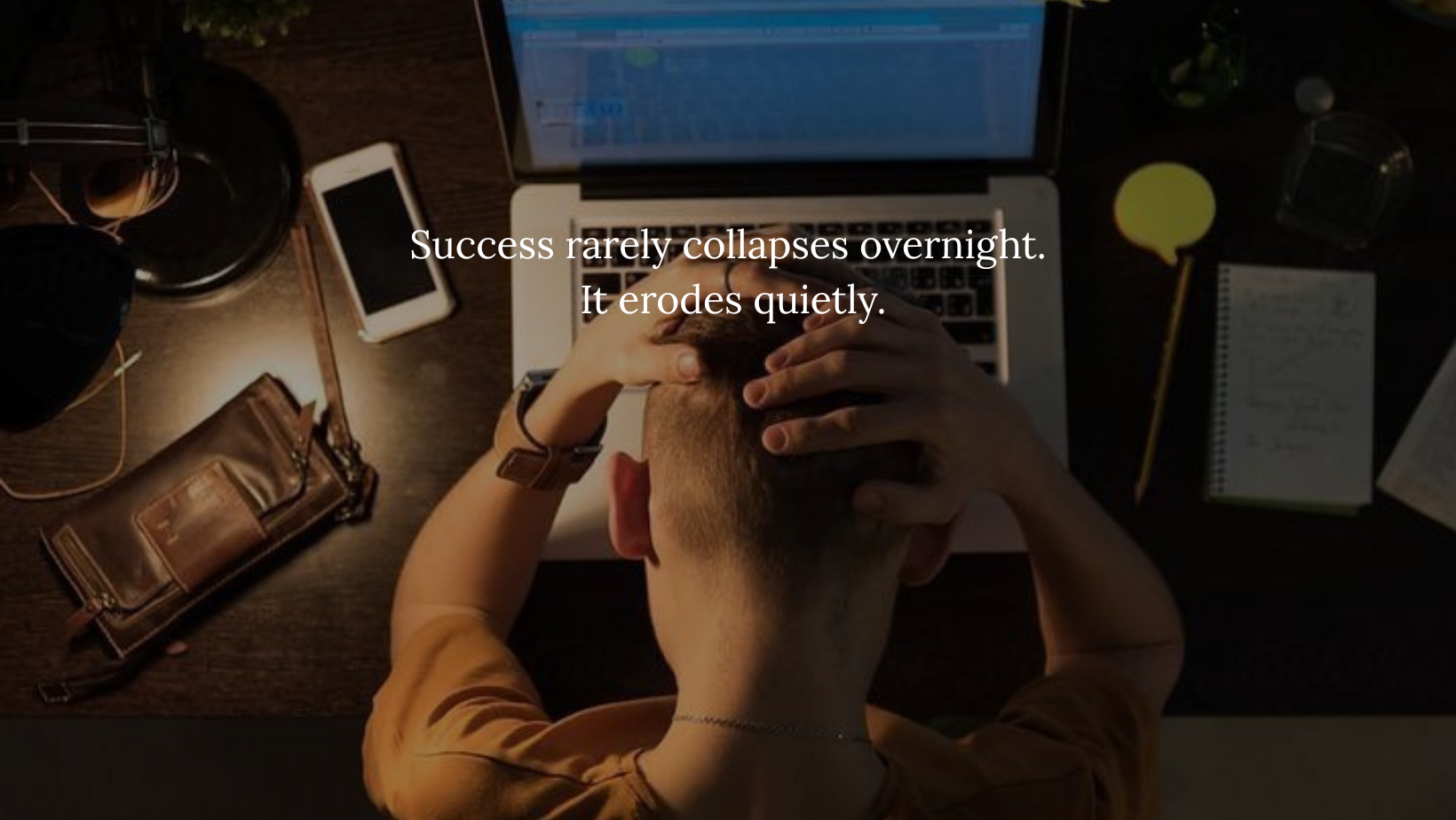
Success rarely collapses overnight. It erodes quietly.
In business, comfort does not usually appear as laziness or failure. It shows up in far more subtle forms. It sounds like reasonable excuses. It feels like something you have earned. It convinces you that easing up is justified because you have already done enough.
After a strong quarter, after a successful event, after a big sales week, comfort begins to whisper. You start to believe that things are stable. That growth will continue on its own. That standards can relax just slightly without consequence.
The problem is that comfort carries a cost. Most entrepreneurs simply fail to calculate it.
The Illusion Of Stability
After hosting Ninjacon last week, I watched franchisees leave energized, focused, and ambitious. Goals were set. Systems were discussed. Marketing strategies were refined. The intensity in the room was undeniable.
But experience has taught me that the real test of leadership does not happen during a high-energy event. It happens in the weeks that follow.
When you return home.
When routine takes over.
When urgent tasks replace strategic thinking.
When you stop feeling the adrenaline of momentum.
That is where comfort begins to creep in.
Nothing dramatic happens at first. You simply loosen your grip.
You prospect slightly less.
You delay system improvements.
You postpone difficult conversations.
You stop reviewing metrics as carefully.
You assume performance will sustain itself.
It feels harmless. It feels temporary. It feels justified.
But it is not harmless.
Growth does not plateau because markets change overnight. It often plateaus because standards soften.
The Compounding Effect of Small Decisions
One of the principles I emphasize frequently is simple: five minutes today can save you one hour tomorrow.
This concept sounds small, but it is foundational to building scalable operations.
When you clarify a process immediately instead of tolerating confusion, you prevent repeated mistakes. When you tighten pricing instead of ignoring margin leakage, you preserve profitability. When you roleplay with your team instead of assuming competence, you increase conversion rates.
Small acts of discipline compound just as powerfully as small acts of avoidance.
The cost of comfort is rarely immediate. It reveals itself months later in slower growth, thinner margins, and weaker culture.
Entrepreneurs often believe that coasting during good seasons is harmless. In reality, those are the very seasons where discipline matters most. Busy periods should be used to strengthen infrastructure, expand marketing reach, and refine systems so that slower seasons remain profitable.
Comfort convinces you to maintain.
Discipline pushes you to improve.
Leadership Is Multiplication
In every organization, intensity flows downward.
If the owner relaxes standards, managers relax expectations. If managers ease up, frontline team members follow suit. Culture is not built by slogans; it is built by modeled behavior.
At Ninjacon, we discussed attention as the real currency in business. Attention is generated by energy, by speed, by visible commitment to improvement.
A call center agent performs differently when they know leadership is reviewing metrics daily. A service technician operates differently when they see that standards are enforced consistently. Marketing partners execute differently when they feel urgency from the top.
Comfort at the leadership level multiplies complacency throughout the organization.
Conversely, disciplined leadership multiplies performance.
This is not about intensity for the sake of pressure. It is about clarity. When standards are clear and consistently reinforced, teams perform with confidence.
Speed Versus Delay
Another hidden cost of comfort is the loss of speed.
Speed to follow up.
Speed to implement improvements.
Speed to correct mistakes.
Speed to promote services.
In competitive markets, speed creates advantage. Delayed decisions allow competitors to capture attention, revenue, and market share.
Comfort often disguises itself as patience. It suggests waiting for the perfect time to adjust pricing, launch campaigns, refine scripts, or expand territory. In reality, strategic momentum favors those who act decisively.
Businesses that grow consistently do not wait for ideal conditions. They build systems that allow them to respond quickly and confidently.
The Paradox of Freedom
Many entrepreneurs seek comfort because they believe it represents freedom.
But short-term comfort and long-term freedom are not the same thing.
True operational freedom is engineered. It is built through disciplined calendar management, structured deep work, clearly defined processes, and relentless refinement of systems.
The philosophy behind buying back your time is not about working less. It is about working intentionally so that chaos is reduced and predictability increases.
When structure is strong, leaders regain time because the business runs with clarity.
Comfort avoids structure. Discipline builds it.
Over time, the disciplined operator gains flexibility, peace of mind, and financial stability. The comfortable operator gains temporary relief but sacrifices long-term leverage.
Projecting The Next Six Months
Consider two possible futures.
In the first, you tighten your standards immediately after a strong quarter. You increase marketing during the busy season. You track metrics more closely. You refine processes. You address underperformance directly. You invest in infrastructure.
Six months later, your business is stronger, more profitable, and more predictable.
In the second scenario, you relax because results feel acceptable. You postpone improvements. You assume systems are “good enough.” You reduce urgency.
Six months later, growth slows. Margins compress. Team accountability weakens.
Neither outcome happens by accident.
Both are the result of daily posture.
Designing The Business You Actually Want
The businesses that scale, create wealth, and provide long-term security are not built on comfort. They are built on intentional design.
Intentional design requires:
Structured calendars.
Clear metrics.
Defined expectations.
Relentless follow-up.
Continuous improvement.
These are not glamorous practices. They are disciplined ones.
If you aspire to reach another level of profitability, leadership, or personal freedom, the path is not found in easing up. It is found in tightening systems when things are already working.
The hidden cost of comfort is not obvious in the moment.
But prosperity is rarely accidental.
It is engineered.
And the leaders who understand that truth position themselves, their teams, and their families for sustained success.
Keep Shining.
