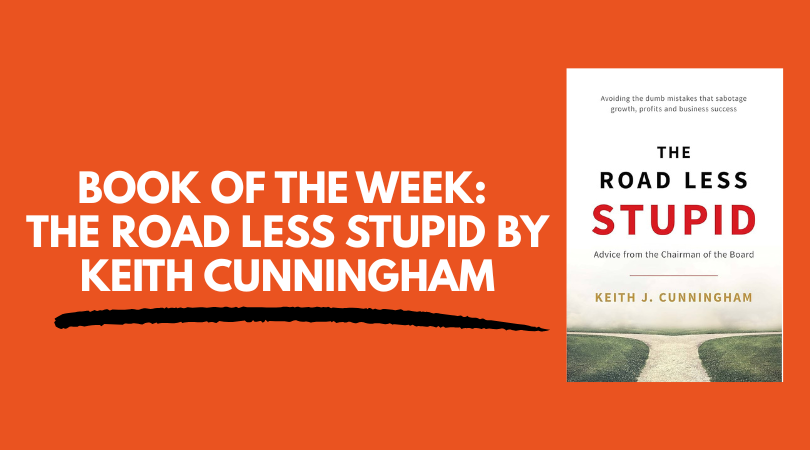
How many times have you paid the Dumb Tax? You know what I’m talking about. That painful cost of making an emotional decision, rushing into a deal, or skipping the time it takes to really think. I’ve paid it more than once. And every time I think about it, I laugh at the phrase but wince at the reality.
That’s the big punchline of The Road Less Stupid. It isn’t about doing more smart things. It’s about doing fewer dumb things. And the way Cunningham suggests we get there is simple but life-changing: Build regular “Thinking Time” into our schedule, sit quietly, ask ourselves focused questions, and write down our answers. That practice alone can save millions of dollars and years of heartache.
Why This Book Hit Me So Hard
When I first read this book, it was like getting slapped upside the head with common sense. I’m a doer. I’m an action guy. Window Ninjas started with me, a squeegee, and a drive to win. Action has always been my secret sauce. But action without thought? That’s how you end up cleaning up mistakes, apologizing for rash calls, and wasting energy.
Cunningham reminded me that leaders don’t just react. They think! He draws a line between “operators” (who run around reacting, sweating, grinding) and “owners” (who sit, think, plan, and decide intentionally). That hit me right in the chest. Because as much as I love hustling, I don’t want to just be an operator. I want to be an owner in the truest sense.

The Concept of “Thinking Time”
The book outlines Cunningham’s practice of carving out 30 to 45 minutes on a regular basis to do nothing but think. No phone. No distractions. Just a pen, a notebook, and one great question to wrestle with.
Why is this so powerful? Because problems are usually nothing more than unanswered questions. Cunningham says, “Sadly, most unanswered questions remain unanswered because the question was never asked.” That line made me pause. How often do we grind forward without ever stopping to ask, “What’s the real question here? What am I not seeing?”
Thinking Time forces you to ask and answer. It slows down the noise so clarity can come out on paper. And that clarity saves you from the Dumb Tax.
The Infamous Dumb Tax
Let’s talk about that phrase for a second. Dumb Tax. I love it. It always makes me laugh because it’s so true. We’ve all paid it. Whether it was hiring the wrong person because we rushed the process, signing a bad contract because we didn’t read the fine print, or scaling something too fast before the systems were ready we’ve all written that check.
Cunningham’s brilliance is reminding us that we don’t need to do more smart things. We just need to avoid doing dumb ones. That single idea can add zeros to your bank account and years back to your life.

Personal Takeaway #1: Schedule Thinking Like a Meeting
After reading this book, I started to realize I had been filling every block of my day with action. Calls. Meetings. Training. Content. But where was the space to think? Nowhere. Cunningham convicted me. If I don’t schedule thinking, it won’t happen.
So that’s what I’m working on building time into my daily rhythm to sit down, ask myself a focused question, and write. Not type. Write. Because there’s something about pen on paper that connects thoughts more deeply. I challenge anyone reading this to block off 30 minutes this week and give it a try.
Personal Takeaway #2: Emotions Kill Intellect
One of Cunningham’s lines that stuck with me is, “Emotions and intellect work inversely. When emotions go up, intellect goes down.”
I can’t tell you how many times I’ve seen this play out in my own life. When I’m frustrated, angry, or hyped up, I make worse decisions. Period. This book reminded me that stepping back and thinking with a clear head is the difference between a smart move and a costly Dumb Tax.
Personal Takeaway #3: Write Down Outcomes, Not Wishes
Another idea that landed with me is Cunningham’s point that goals often become wishes. Anyone can say, “I want to grow my business” or “I want to be healthier.” But unless you write down specific outcomes and think through how to achieve them, you’re just daydreaming.
I started shifting my language from “goals” to “objectives.” Instead of saying, “I want Window Ninjas to grow,” I write, “Window Ninjas will open three new franchise locations this year.” It changes the energy. It forces my brain to figure out how. That’s the power of writing outcomes during Thinking Time.
Why This Book Matters for Entrepreneurs
If you’re building a business, here’s the hard truth: you don’t need more hacks, shortcuts, or flashy ideas. You need fewer mistakes. Most entrepreneurs don’t fail because they weren’t smart enough. They fail because they didn’t stop to think, asked the wrong questions, or let emotions drive the bus.
This book gives you the discipline to prevent that. It isn’t sexy. It isn’t complicated. But it works.
My Golden Squeegee Rating

I give The Road Less Stupid 4 out of 5 Golden Squeegees. Why? Because it’s one of those books that will save you more money than it ever costs you. Every Dumb Tax avoided is a direct return on investment.
For me, this book was a wake up call that I don’t just need to hustle harder, I need to think deeper. It’s the kind of book that makes you laugh, shake your head, and then look at your calendar to block off Thinking Time immediately.
Final Takeaway and My Call to Action To YOU
Phil Knight once said business is like running, you just keep going even when it hurts. Cunningham would add: “Don’t keep running into a wall. Stop. Think. Ask a better question. Then move forward.”
So here’s my challenge to you: Block 30 minutes this week. Sit down with a pen and paper. Ask yourself one big question, maybe it’s about your business, or your family, your goals. Write down your answers. That’s it. Do it once and you’ll see the value. Do it regularly and you’ll avoid paying Dumb Taxes for the rest of your life.
If you’re ready to level up as a business owner, or just as a thinker, go grab a copy of The Road Less Stupid. Read it. Apply it. And start saving yourself the pain of bad decisions.
Keep Shining.
Gabe Salinas
