
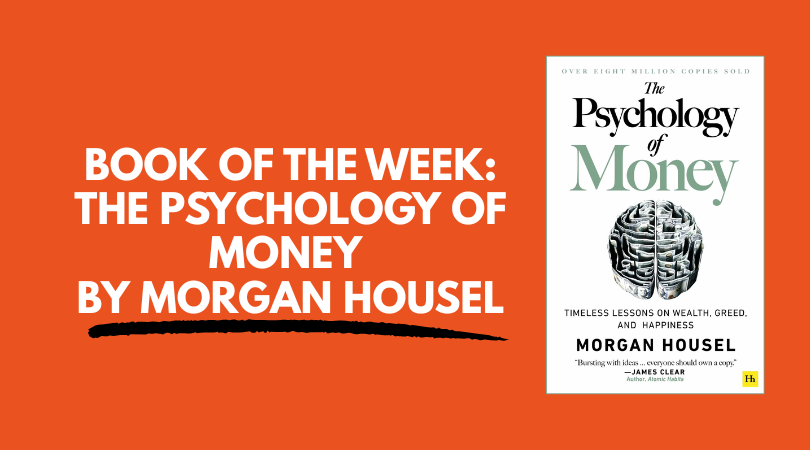
Why Changing The Way You Think About Money Will Change Everything Else Too
We all want wealth. We all want freedom. We all want a life that feels full, powerful, and intentional. Yet most people spend their entire lives trapped in financial stress. Not because they are unintelligent. Not because they lack opportunity. Most people stay stuck because they never confront the truth that wealth has very little to do with knowledge and everything to do with behavior.

That is the punch in the face this book delivers.
Not theory. Not formulas.
Truth.
Morgan Housel takes you out of the spreadsheets and drops you straight into your own head. Into the emotions that drive your financial decisions. Into the patterns you inherited without even realizing it. Into the quiet beliefs that shape the way you earn, spend, save, and behave. He forces you to stop looking at money as numbers and start seeing it as psychology.
This book lit me up harder than most. I have lived both sides of the money mindset. I grew up thinking we had money because we lived like middle class people. But let me tell you something. Middle class is not having money. Middle class is working hard enough to look like you have money without actually having wealth. There is a massive difference between income and security, and this book exposes that difference with frightening clarity.
It made me reflect on my own story. On the mistakes, the lessons, the reinventions, the discipline and the identity shifts that built the life I have today. Wealth is not the car you drive. Wealth is not the nice watch. Wealth is not the house. Wealth is the freedom that comes from owning your time, your choices, and your future. Once you understand that, money takes on a whole new meaning.
Status Is The Silent Killer Of Wealth
There is a chapter in this book that absolutely stopped me in my tracks. The idea that most people go into massive debt because they are chasing status. And the way Housel breaks it down is painfully accurate.
People making one hundred thousand dollars a year go finance a one hundred thousand dollar car and then claim they are doing well. My friend, you did not buy the car. You bought the debt. You spent one hundred thousand dollars to go one hundred thousand dollars backward. And for what. A moment of status. A temporary dopamine hit. The belief that people admire you more when you have expensive things.
This is the trap.
This is the psychology that keeps people chained to the very lifestyle they claim they want freedom from.
Look, I like nice things. Always have. Even before I had a piggy bank to put pennies in. I like quality. I like luxury. I like excellence. But what I learned early is that the feeling you get after a purchase tells you more about your relationship with money than the purchase itself ever will. If you feel guilty, you are living for status. If you feel grounded, you are living for your purpose.
Most people are buying things to impress people who are not looking.
Most people are financing a life they cannot actually afford.
Most people are trading the next forty years of their life for an image that lasts four seconds.
This book rips that illusion wide open. And once you see it, you cannot unsee it.
The Money Beliefs You Inherit Shape The Ones You Create
Growing up, I thought we had money. We lived like we did. We acted like we did. But the truth was clear. We were middle class. Which means we had income, not wealth. We had enough to get by, not enough to build something real.
That mindset followed me into adulthood. It followed me into business. It followed me into the early days of entrepreneurship. Because when you grow up believing middle class is “normal,” you quickly realize that normal does not give you freedom. Normal keeps you working until you cannot work anymore.
The Psychology of Money forces you to examine those beliefs and challenge them.
Because the beliefs you carry become the behaviors you repeat.
And the behaviors you repeat become the life you live.
The Moment My Money Mindset Flipped
I will tell you the exact moment my psychology of money changed.
It was when I started making real money.
Not millionaire money. Not wealthy money.
Just… real money. Enough to breathe.
And do you know what I had to do with it?
Go backwards.
Pay off debt.
Wipe out the credit cards I relied on to survive.
That was humbling.
But it was a gamechanger.
Because the moment I decided to walk backward to fix my foundation instead of sprinting forward to look successful, everything shifted. Paying off that debt was the beginning of my financial identity. It was proof that discipline matters more than income. It showed me that real wealth is not earned. It is protected. It is grown. It is respected.
And once I eliminated that debt, my wealth finally had a place to grow.
The Most Expensive Money Lesson I Ever Learned
Let’s talk about mistakes.
Because you cannot grow wealth without making a few.
My biggest money mistake was simple.
I did not save enough. I did not hold onto the commercial properties I bought. If I had kept them, I would be worth far more today than I am now. Selling those properties helped me level up over time and it eventually led me to the building I own today. But the lesson still stands.
Real estate rewards the patient.
Money rewards the disciplined.
Wealth rewards the long term thinker.
If I could go back, I would pay those properties off in five years. Aggressive. Focused. Intentional. That is how you build real wealth. Not through status. Not through image. Through ownership.
This book reminded me of that truth.
Your future wealth depends on your current behavior.
Not your current income.
Wealth Is Quiet. Wealth Is Invisible. Wealth Is What You Don’t See.
One of the strongest ideas in the book is that wealth is the stuff you do not see.
The cars you did not buy.
The upgrades you did not rush into.
The things you didn’t flex for strangers.
That hit home for me.
Because once I outgrew the need to prove anything to anyone, my wealth skyrocketed. I invested in the business. I bought assets instead of toys. I saved. And now, today, I save even more.
That is how wealth works.
Quiet decisions.
Repeated consistently.
Applied patiently.
Built intentionally.
What Is Enough Really About
People love the idea of enough.
The perfect number.
The finish line.
The moment they can slow down.
Let me be brutally honest.
Enough is not a number.
Enough is an identity.
Saying you have enough is like saying you are done learning.
Done growing.
Done pushing.
Done becoming more.
I do not believe in the word enough.
Not because I am greedy, but because I am growing.
I have too much life left to live to cap my own potential.
Enough is not a destination.
Enough is the confidence that you are living with purpose.
And purpose never stops expanding.
My Commitment After Reading This Book
This book reinforced one thing for me.
Save more.
Invest intentionally.
Protect the future I am building.
Continue mastering the behaviors that create wealth.
That is the psychology of money in action.
Not theory.
Execution.
My Challenge To You
If you really want to change your financial life, start here.
Understand why you believe what you believe about money.
Then read this book.
Then sit quietly with the uncomfortable parts.
Then make the mental shift Morgan Housel challenges you to make early in the book.
Shift from income to discipline.
Shift from status to wealth.
Shift from impulse to intention.
Shift from drifting to deciding.
Because when you change your psychology, you change your money.
And when you change your money, you change your life.
Gabe’s Golden Squeegee Rating
I give The Psychology of Money
4.7 out of 5 Golden Squeegees

This book is powerful and real. It is simple, yet deep. It challenges your identity in a way few money books ever do. Wealth is not math. Wealth is behavior. Wealth is patience. Wealth is identity. Master those, and money becomes the byproduct of your character.
Keep Shining.
