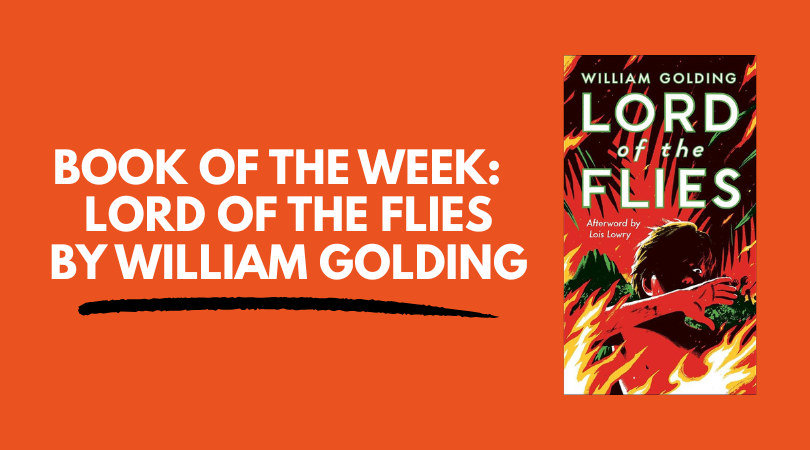
A few years ago, my younger son told me I needed to read Lord of the Flies.
Like many recommendations from our kids, I nodded my head, mentally added it to the list, and then proceeded to read about fifty other books before finally getting around to it.
Not because I didn’t trust his judgment.
I just always seem to have a stack of books waiting their turn on the nightstand.
Fast forward a few years, and I finally picked it up.
Now I’m wondering why I waited so long.
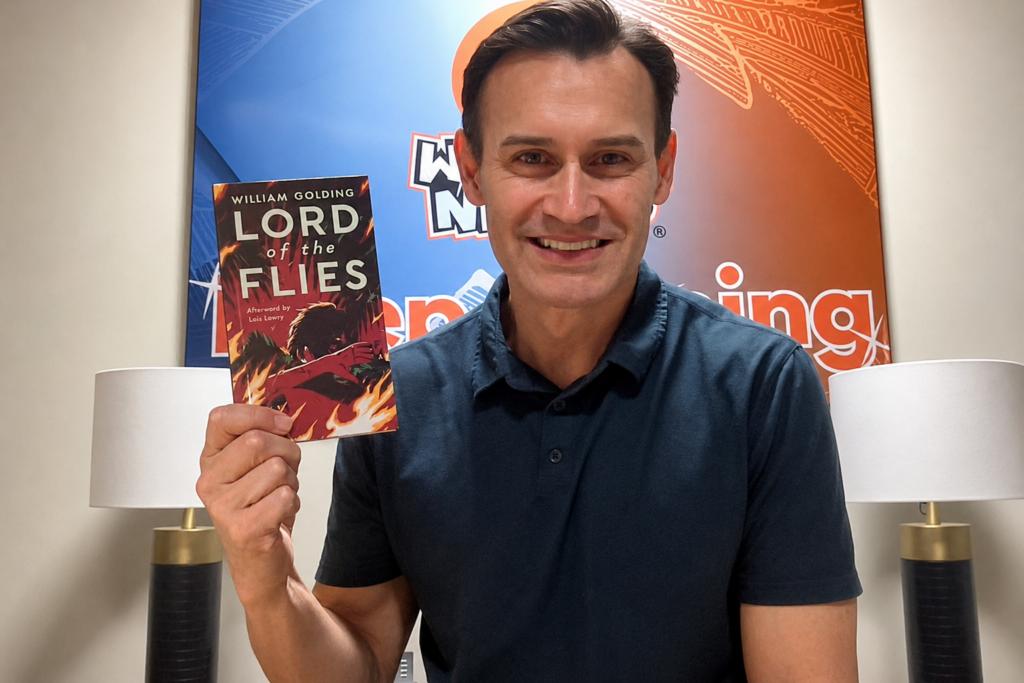
Because Lord of the Flies isn’t really a story about boys stranded on an island.
It’s a story about leadership.
It’s a story about accountability.
It’s a story about human nature.
And perhaps most importantly, it’s a story about how quickly civilization can begin to unravel when rules stop mattering and emotions become more important than reason.
That may sound dramatic.
Unfortunately, it isn’t.
The Island Is Just a Stage
On the surface, the story is simple.
A group of British schoolboys survive a plane crash and find themselves stranded on a deserted island with no adults, no authority figures, and no obvious path home.
At first, things go surprisingly well.
The boys organize.
They establish rules.
They elect a leader.
They create responsibilities.
They build a signal fire to increase their chances of rescue.
In other words, they create civilization.
The leader they choose is Ralph, and as I read the book, I found myself relating to him more than any other character.
Ralph understands something many people overlook.
Objectives matter.
You can have feelings.
You can have opinions.
You can have fears.
But at the end of the day, somebody still has to build the shelter.
Somebody still has to tend the fire.
Somebody still has to keep the group moving toward the goal.
Ralph understood that.
So did Piggy.
In fact, I found myself relating to Piggy as well.
Piggy represented logic, reason, and common sense. He wasn’t flashy. He wasn’t popular. He certainly wasn’t cool. But more often than not, he was right.
And that got me thinking.
How many times in life do we ignore the person speaking the truth because we don’t like the way the truth sounds?
How many times do we dismiss reason because emotion feels better in the moment?
Golding understood this part of human nature extremely well.
Nobody Wakes Up a Savage
One of the most powerful lessons in the book is that the boys don’t suddenly become savages overnight.
The transformation happens slowly.
One small compromise.
Then another.
Then another.
And before long, what was once unacceptable becomes normal.
It reminded me of a house.
Imagine buying a beautiful home.
Fresh paint.
Clean walls.
Bright trim.
Everything looks perfect.
Then you stop maintaining it.
Not for a week. Not for a month.
For years.
The paint begins to fade.
The walls collect dirt.
One electrical outlet stops working.
A fixture breaks.
A little crack appears.
Then another.
The changes are so gradual that you barely notice them.
In fact, they become your new normal.
What once looked pristine now looks average.
What once looked average now looks worn down.
And eventually you’re sitting in a room that desperately needs attention, wondering how it got that way.
The answer is simple.
It didn’t happen all at once.
It happened one neglected detail at a time.
That is exactly what happens on the island.
And it’s exactly what happens in businesses, families, communities, and societies.
Cultures rarely collapse because of one catastrophic decision.
They collapse because of thousands of small decisions that go unchallenged.
The Cost of Following the Crowd
The deaths of Simon and Piggy are the moments that hit me the hardest.
Death always gets your attention.
But it wasn’t simply that they died.
It was how they died.
Both deaths were the result of a group abandoning reason and allowing emotion, fear, and mob mentality to take control.
As I reflected on those scenes, I couldn’t help but think about modern society.
We hear it all the time.
“Everybody is doing it.”
As if popularity somehow determines whether something is wise.
History has repeatedly shown us that some of humanity’s worst decisions began with those exact words.
Everybody doing something doesn’t make it right.
Everybody believing something doesn’t make it true.
Everybody participating doesn’t remove consequences.
That lesson feels especially relevant today.
Social media has amplified groupthink in ways Golding probably never could have imagined.
People naturally gather around those who think like they do.
There is nothing wrong with that.
The danger begins when disagreement becomes unacceptable.
When questioning becomes offensive.
When facts become less important than feelings.
That is where problems begin.
And that is exactly what unfolds on the island.
The boys stop evaluating situations objectively.
Fear takes over.
Emotion takes over.
The crowd takes over.
The result is tragic.
Why Leadership Matters
If there is one lesson I took away from this book, it is this:
Leadership matters far more than most people realize.
Strong leadership does not guarantee success.
But weak leadership almost always guarantees decline.
Leaders establish standards.
Leaders enforce accountability.
Leaders make difficult decisions when others would rather avoid conflict.
Leaders protect culture before culture begins protecting itself.
One thing I see often in business is the tendency to let small issues slide.
A task gets completed at 85%.
Good enough.
A process is skipped.
No big deal.
A standard gets lowered slightly.
Nobody notices.
Until they do.
That missing 15% matters.
It always matters.
Just as the boys didn’t become savages overnight, organizations don’t lose culture overnight either.
The erosion is gradual.
The damage is cumulative.
The consequences eventually arrive.
Good leaders understand this.
They address small problems before they become large ones.
They protect standards.
They protect accountability.
And most importantly, they lead by example.
Piggy Was Right
One of the biggest realizations I had while reading this book was how important Piggy really was.
Many of the boys viewed him as weak.
Some saw him as annoying.
Others dismissed him entirely.
But Piggy represented something essential.
Reason.
Logic.
Critical thinking.
The ability to pause and evaluate before reacting.
In many ways, Piggy represented civilization itself.
And because the group failed to appreciate his value, they lost one of the few voices capable of steering them back toward order.
There is a lesson there for all of us.
Not every valuable voice arrives wrapped in charisma.
Not every wise person commands the room.
Sometimes wisdom wears thick glasses and tells you things you’d rather not hear.
The trick is learning to listen anyway.
Golden Squeegee Rating
When my son first recommended Lord of the Flies, I assumed I was picking up a classic novel about kids stranded on an island.
What I found instead was a masterclass on leadership, accountability, culture, and human nature.
The book serves as a reminder that civilization is not self-sustaining.
Rules matter.
Standards matter.
Accountability matters.
Leadership matters.
Without them, things begin to erode.
Not all at once.
One character trait at a time.
One compromise at a time.
One ignored standard at a time.
Until eventually, the consequences arrive.
Lord of the Flies is thought-provoking, timeless, and perhaps more relevant today than when it was first published.
It earns a full 5 out of 5 Golden Squeegees from me.

And for once, I can confidently say my son was absolutely right.
Keep Shining.
