The Hidden Architecture of Every Decision You Make
There is a quiet force shaping your life.
It influences the jobs you accept, the people you trust, the brands you buy from, the risks you take, and the risks you avoid. It operates beneath conscious awareness, yet it determines outcomes with remarkable consistency. Most of us feel it without understanding it. Fewer still learn to harness it.
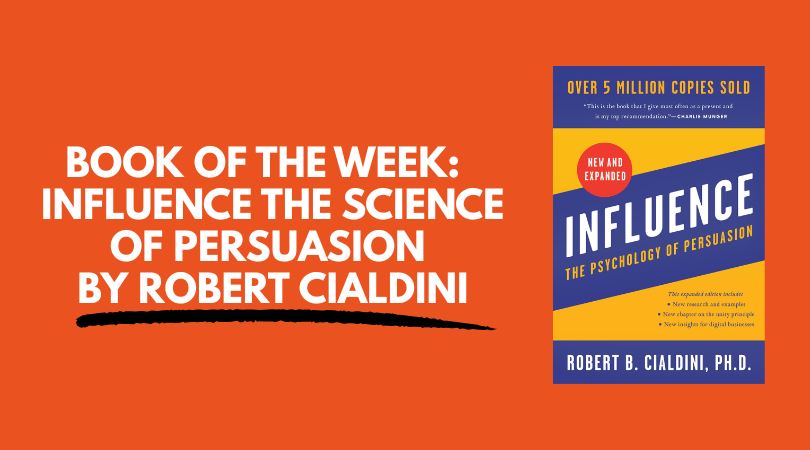
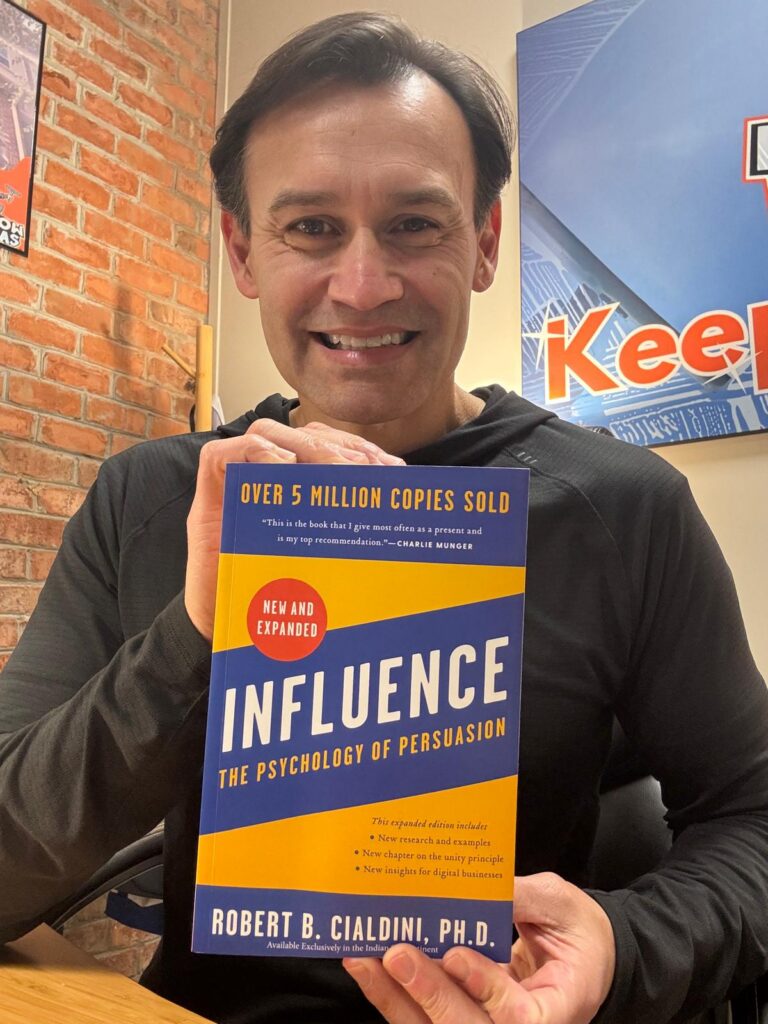
Last week, after seeing Alex Hormozi reference Influence: The Psychology of Persuasion by Robert Cialdini as one of the most impactful books he had ever read, I decided to revisit it with intention. I expected a well-researched examination of sales psychology. What I encountered instead was a structural explanation of human behavior. An operating system that has quietly shaped my business decisions since the early days, long before I had language for it.
Cialdini’s central premise is disarmingly simple: human beings respond predictably to certain psychological triggers. These triggers are neither inherently good nor bad. They are tools. Used ethically, they create trust, loyalty, and momentum. Used manipulatively, they generate pressure, confusion, and regret. Understanding the difference is where leadership begins.
Of the principles he outlines, reciprocity stands at the foundation. It is the social contract beneath commerce itself. When someone gives us something, attention, effort, insight, generosity we experience an internal tension until we restore balance. This instinct predates modern business. It enabled early communities to survive. It still governs how trust is formed today.
Reading about reciprocity brought me back to the earliest version of myself in business. I can still remember pulling up to affluent neighborhoods as a young window cleaner, stepping out of a truck that carried more ambition than reputation. The homes were impressive. The driveways immaculate. I understood the gap between where I was and where many of these homeowners had already arrived.
Yet my mindset was never to extract as much as possible from the situation. I saw a problem in front of me: windows that needed attention, gutters that required clearing…..and an opportunity to solve it well. The interaction was simple: show up prepared, deliver value, treat people fairly, and leave the property better than I found it. What I did not understand at the time was that this approach aligned naturally with reciprocity. When people felt genuinely served, the relationship extended beyond a single transaction. They called again. They referred neighbors. They trusted me.
Trust Compounds Faster Than Persuasion.
Another principle that resonated deeply is scarcity. When something is limited, such as: time, access, or opportunity, its perceived value increases. Scarcity is powerful, and that is precisely why it must be handled carefully. In franchising, territory limitations are not marketing tactics; they are structural realities. There are only so many viable markets, only so many strong operators who can be supported at one time. When scarcity is authentic, it clarifies decisions. When it is manufactured, it corrodes credibility.
Cialdini’s work does not glamorize influence; it exposes its mechanics. He demonstrates how the same psychological forces that help ethical leaders build trust are used by scammers to create urgency and compliance. That awareness alone is invaluable. Once you understand the architecture, you recognize when it is being constructed around you.
As I progressed through the book, I began to see how many of these principles were already embedded within our systems at Window Ninjas. Commitment and consistency explain why public goals increase follow-through. Social proof clarifies why reviews and testimonials accelerate trust. Authority reinforces why uniforms, structured processes, and professional presentation reduce resistance before a conversation even begins. Unity, the sense of shared identity, illuminates why people gravitate toward leaders who feel familiar in values and experience.
The insight was not that we had discovered a secret formula. It was that our most effective practices were aligned with enduring aspects of human psychology. When elements of our sales process are skipped or rushed, performance declines not because of luck, but because the system has drifted out of alignment with how people naturally decide.
This realization carries implications far beyond business development. It reframes leadership itself. Influence is not about clever phrasing or charismatic presence. It is about designing environments that respect human nature. When structure and psychology work together, momentum builds almost organically. When they clash, friction increases.
Imagine projecting five years forward. The leaders who will scale enduring companies will not simply work harder. They will understand behavioral dynamics more precisely. They will build cultures grounded in reciprocity, clarity, and authentic scarcity. They will train teams not only on what to say, but on why certain conversations succeed and others fail. That depth of understanding becomes a competitive advantage.
Influence is not a light read. It is dense, methodical, and research-heavy. It demands attention rather than offering quick inspiration. For that reason, I rated it 4.75 out of 5 Golden Squeegees. Its value lies not in immediate motivation but in lasting clarity. It is the kind of book one revisits periodically, discovering new dimensions with each pass.

For those in sales, leadership, or entrepreneurship, it provides a structural lens through which daily interactions can be evaluated. For younger professionals seeking to accelerate their trajectory, it offers early exposure to principles that many only grasp after years of trial and error.
Influence is always present. The only variable is whether we are conscious of it.
In business and in life, understanding the forces that shape decisions allows us to operate with greater integrity and effectiveness. It sharpens discernment. It strengthens systems. It elevates conversations.
And ultimately, it challenges each of us to build in a way that earns trust rather than demands it.
Keep Shining.
