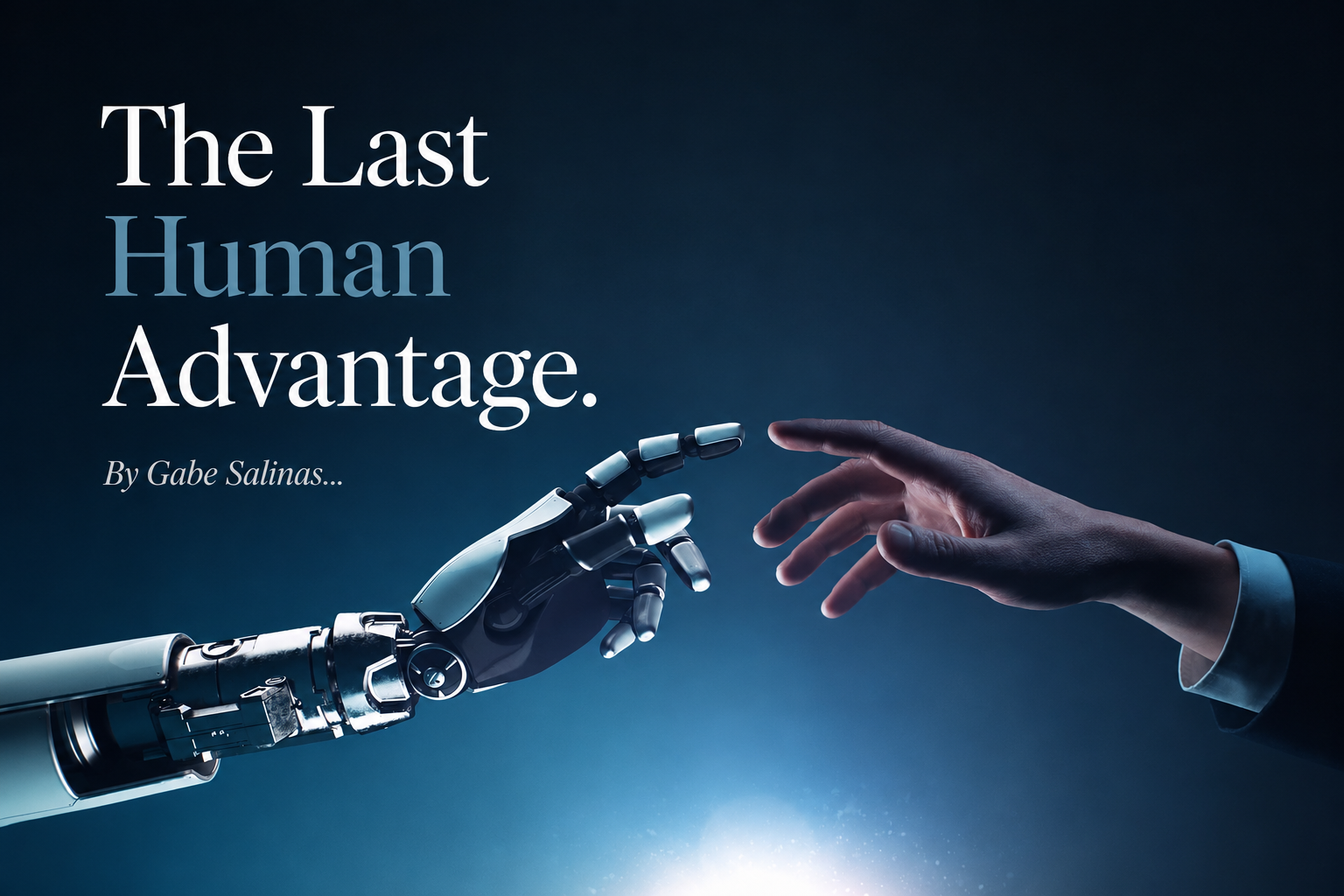
Automation is eating jobs. That’s not a hot take, it’s just math. I’ve watched machines get better at damn near every piece of what I do, and I’m not scared of a single one of them. Not because I’m tough. Because a machine can wash the glass, run the invoice, and book the slot, and it still can’t do the one thing that earned me every dollar I ever made. It can’t make a person feel like they matter.
John DiJulius saw this coming. In “The Relationship Economy,” he makes the case that automation doesn’t just take jobs, it raises the floor on what the remaining jobs require. Every transaction that gets handed to a bot creates a vacancy that only a human can fill. The kind of connection that makes someone hang up the phone and think “I just talked to somebody good.” That’s not a soft skill. That’s the whole game.
The Fear Nobody Can Explain
Let me guess what happened the last time you thought seriously about the future of your business.
You read a headline about AI. Maybe you watched some 24-year-old on a podcast explain that everything you know is about to be obsolete. And somewhere between your second cup of coffee and your first customer call, a quiet little question crawled into your head and set up camp.
“Is what I’m building going to matter in five years?”
If that question has visited you, I want you to know something. You are not paranoid, you are not behind, and you are definitely not alone. You’re paying attention. That’s different.
But I also want to show you something. The fear and the facts are pointing in two completely different directions. And the facts are a lot more interesting.
AI is just the newest face on a very old fear. Twenty years ago it was “the internet is going to kill your business.” Before that it was the big box stores. There is always a monster under the bed, and the monster always has a new name. Here’s what 30 years on ladders taught me about that monster.
The Protocol Nobody Teaches
I started in this industry at 17 years old in downtown Raleigh. My entire onboarding was a t-shirt and two words: “follow me.” Somebody pointed at a pane of glass and told me to scrub. No training. No manual. No real explanation of why we did anything the way we did it.
Three decades later I’ve built Window Ninjas into a ten-location operation, and I’ve watched wave after wave of technology roll through the business world. Computers, cell phones, scheduling software, review sites, and now AI.
You know what none of that technology has ever done?
Made the phone call on the way to the job.
That call is the first moment a customer knows they’re dealing with a person, not a transaction. It says I’m coming, I’m on time, and I’m thinking about you before I’ve pulled into your driveway. Then there’s the knock on the door and the warm hello. Not rushed. Not scripted. Genuine. Then the part most techs skip entirely: “Let’s walk the property together so I understand exactly what you need.”
That walk is everything. That’s where you find out the customer has a dog that needs to be kept inside. That’s where you notice the cracked seal on the third-floor window and mention it before it becomes a four-figure problem. That’s where you read how they’re feeling and decide whether they want conversation or quiet professionalism. No algorithm runs that sequence. No bot feels the room.
Here’s the painful irony. We built bots partly because humans kept skipping that protocol. Too many people showed up, did the task, left, and never made anyone feel a thing. So we automated the task. But automation can only follow the script. It cannot MacGyver the script when the situation calls for something better. It cannot feel when a customer needs a suggestive option based on what they need and how they’re feeling in that moment.
That instinct, that human read, is what separates a good tech from a great one. And unfortunately, a lot of younger employees haven’t been taught that the connection is the job. The glass is almost secondary.
The Last Human Advantage
No AI has ever built a relationship.
When a property manager calls me instead of getting three bids, that call is not about squeegees. That call is 15 years of showing up, doing what we said, and treating her buildings like they were ours. Technology can write the invoice. It cannot earn the phone call.
That is the last human advantage, and in a service business, it is not a small edge. It’s the whole game.
The businesses that should be nervous right now are the ones built entirely of tasks a machine can swallow whole. A service business built on ladders, weather, handshakes, and trust? Good luck automating that stack.
Data backs this up. FranchiseInsights.com has been tracking small business buyer sentiment for over six years, and their latest survey showed that “not likely threatened by AI” ranked dead last in what buyers care about when choosing a business. Last. Behind everything. The buyers aren’t scared. They’re shopping for low overhead, real earning potential, schedule freedom, and human relationships that compound like interest.
That stuff was never in danger. You were just told it was.
What AI Actually Is When You Own the Business
I’m not here to tell you AI is fake or that you should ignore it. That would make me the complacent guy, and complacency is the one thing in this industry I genuinely fear.
AI is a tool. In my business it belongs in the same category as the truck and the water-fed pole. It can help you route your crews tighter, answer the phone after hours, follow up on estimates, and handle your marketing. Used right, it makes a service business owner faster and sharper.
What it cannot do is be the business. The business is the work, and the work is human hands, human judgment, and human relationships. AI in a service company is a better hammer. It is not a carpenter.
Worth Before Net Worth, One More Time
If you’ve read my stuff before, you know I believe in an order of operations: worth before net worth. Become valuable first, and the money follows.
Here’s how that applies to the fear we started with. The people losing sleep over AI are asking “will my business survive?” That’s the wrong question. The right question is “am I building something that makes me more valuable to real human beings every single year?”
If the answer is yes, no technology wave takes that from you. Waves don’t drown lighthouses. They just make them easier to see.
So here’s my challenge to you this week. Take whatever fear has been renting space in your head, AI or otherwise, and put it on paper next to this question: “What can I do that a machine cannot?” Then go double down on that list like your future depends on it.
Because it does.
Go build something a robot can’t touch.
One More Thing, Founder to Future Founder
If you got to this part of the article and felt something click, if low overhead, real earnings, your own calendar, and a map handed to you on day one sounds like the business you’ve been circling for years, then I’ll make this easy.
That’s what Window Ninjas franchising is. I built the company so that the training I never got is the first thing you get. No t-shirt and “follow me.” A real system, live business education, and a team that operates on one simple idea: if you win, we win.
Go to windowninjas.com/franchise and take a look around. If what you see makes sense, let’s talk. Worst case, you leave with better questions. Best case, you leave with a map.
Data referenced in this article comes from the FranchiseInsights.com Small Business Startup Sentiment Index, based on surveys of prospective business buyers conducted March through May 2026.
