
I once owned a ladder I was very proud of.
It was tall. It was aluminum. It was paid for. By every definition I knew at the time, it was an asset.
Then it sat in my garage for three years holding up a bicycle nobody rode.
That’s not an asset. That’s furniture.
I’ve been thinking a lot lately about what wealth actually is, and I keep landing back on that ladder. Because most people I talk to have assets. Plenty of them. They just aren’t using them. And a lot of them are chasing a number when they should be chasing something else entirely.
So let’s talk about it.
Wealth Is Not a Number
Ask ten people what it means to be wealthy and nine of them will give you a number. A big, round one. Usually with a lot of zeros and a little bit of hope.
Every year somebody runs a survey asking Americans how much money it takes to be “wealthy.” The answer always lands in the millions. And every year, most of the people answering don’t have it. Which means most people spend their whole lives feeling not quite rich enough. That’s a rough way to live.
Here’s how I see it. Wealth is not a number. Wealth is an abundance of valuable possessions.
Notice I didn’t say money. Money is one of those possessions, and it’s an important one. I’m not going to sit here and tell you money doesn’t matter. I’ve been broke and I’ve been not broke, and not broke is better. Ask anybody.
But money is one item on the shelf. Your health is on that shelf. Your time is on that shelf. Your skills, your reputation, your family, your friends. All of it is on the shelf. If one item is overflowing and the rest are empty, you are not wealthy. You are lopsided. And lopsided things tip over.
What Is Abundance to You?
This is the question nobody asks themselves out loud.
What does abundance actually look like for you? Not for your brother-in-law. Not for the guy on Instagram leaning on a rented Lamborghini. For you.
For some people it’s being home for dinner every night. For some it’s paying off the house. For some it’s building something big enough that their kids have options they never had. For some it’s simply never having to ask permission to take a Friday off.
None of those answers are wrong. The only wrong answer is not having one.
Then comes the harder question. When is it enough?
If you can’t answer that, you’ll never get there. Not because you can’t earn it, but because the finish line keeps moving. You hit your number and immediately want a new one. That’s not ambition. That’s a treadmill. And the treadmill always wins.
I’m not saying stop growing. I’m saying know what you’re growing toward. A goal without a definition of “enough” is a dog chasing a car. What’s he gonna do if he catches it?
You Have to Have Assets
Here’s where it gets practical.
Look up the word “asset” and you’ll find something like this: property owned by a person or company, regarded as having value and available to meet debts, commitments, or legacies.
Read that last part again. Available to meet debts, commitments, or legacies.
That’s the meat and potatoes right there. An asset isn’t just something you own. It’s something you own that can do something. It pays a bill. It keeps a promise. It leaves something behind for the people who come after you.
My ladder in the garage had value. But it wasn’t available for anything. It wasn’t meeting a single commitment. It was just taking up space and collecting spider webs.
Most people’s assets look a lot like that ladder. Skills they don’t use. Experience they don’t leverage. Relationships they don’t nurture. Savings sitting in an account doing nothing but slowly losing a footrace with inflation.
An asset you don’t use properly is just stuff. And stuff has a funny way of turning into a liability when you’re not looking.
Friends Are Assets (Don’t Make It Weird)
I’ll say this one carefully, because it sounds cold if you say it wrong.
Friends are assets.
I don’t mean you should go around treating people like a line item on a spreadsheet. That’s gross, and people can smell it a mile away. I mean the right people in your life have real value, and that value is available to help you meet your commitments. And your value is available to help them meet theirs.
There’s a study out of Harvard that has been following the same group of people since 1938. More than eighty years of data. The biggest finding wasn’t about money or career or IQ. It was about relationships. The people with strong, close relationships lived happier, healthier lives.
Eighty years of research, and the answer is: have good friends. Your grandmother could have told them that for free.
When I was 17 and started washing windows in the summer of 1992, my asset list was short. A bucket. A squeegee. A ladder that had seen better days. And a handful of people who were willing to tell me the truth, show me how to do it right, and point me toward the next job.
That last group was worth more than all the equipment combined. The equipment got me on the roof. The people got me the next roof.
You Have to Decide Who You Want to Help
Here’s the part that changed everything for me.
At some point you have to decide who you want to help. Wealth with no direction just piles up. Wealth with a direction builds something.
When I left college after half a semester and came back to Raleigh to do this full time, I wasn’t thinking about helping anybody but me. I was a kid. I wanted to get paid.
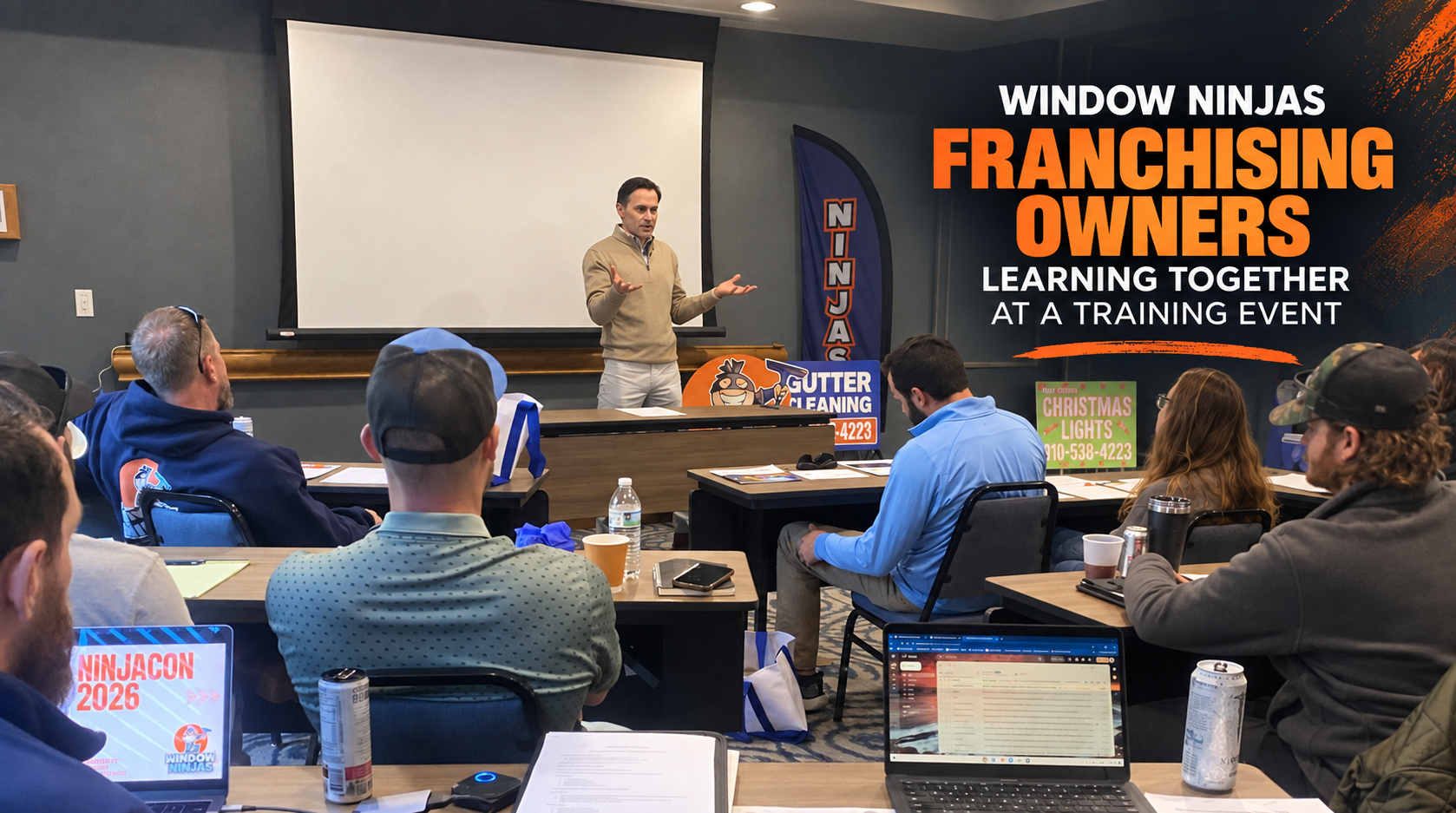
About five years in, I became a franchisee, and I spent roughly 20 years inside that system. I learned a ton. I learned what a good system feels like when it’s working and what it feels like when it isn’t. And I learned that the best owners weren’t always the ones grinding the hardest. They were the ones who used what they had properly. Their training. Their brand. Their support. And most of all, each other.
When I started Window Ninjas in 2018, I finally had a clear answer to the question of who I wanted to help. The person standing where I used to stand. Good at the work, or hungry to learn it. Tired of building someone else’s dream. Ready to own something, but smart enough not to do it alone. That person is still the whole reason Window Ninjas Franchising exists.
That decision gave me a new gear. Once you know who you’re helping, the work stops being about the number. It starts being about the people.
How Do We Create Wealth Together?
This is the question I care about most.
The old way of thinking says wealth is a pie. If I get a bigger slice, you get a smaller one. That’s fine if you’re fighting over dessert. It’s a terrible way to build a business.
The better way says wealth is a garden. You plant together, you tend together, and the harvest gets bigger for everybody.
That’s what a good franchise system is supposed to be, and it’s the standard we hold ourselves to at Window Ninjas Franchising. A pile of assets sitting in one place, available to anyone who joins. A proven way of doing the work. Training so you don’t learn every lesson the expensive way. Support behind you when the phone rings at a bad time. And a group of other owners who have already made the mistakes you’re about to make, and are willing to warn you before those mistakes bite you in the butt.
But here’s the catch. Every one of those assets is just a ladder in the garage if you don’t use it.
I’ve seen people buy into great systems and then ignore the playbook. They skip the training. They don’t call for help. They never pick up the phone to talk to the owner two states over who solved their exact problem last spring. Then they wonder why it isn’t working.
The system didn’t fail them. They just didn’t use the asset properly.
I’ve seen the opposite too. Folks with zero background in this industry who show up, lean on every resource available, ask a hundred questions, and build something they’re proud of. They didn’t have more assets than anybody else. They just used theirs.
Accumulating Wealth Can Mean a Lot of Things
So let’s bring this home.
Accumulating wealth can mean a lot of different things. More money, sure. But also more time. More freedom. More security. More options for your kids. Being the person in your town people trust to show up and do the job right.
It can also mean more friends. Real ones. The kind who make your commitments easier to meet and your legacy worth leaving.
You get to define it. That’s the good news. But you have to define it. Then you have to get your assets out of the garage and put them to work.
Three questions to sit with this week:
What does abundance look like for you?
When is it enough?
Who do you want to help along the way?
If you can answer those, you’re already wealthier than most people chasing a number.
And if you’re reading this and realizing you’ve got assets collecting dust (skills, drive, a little savings, a lot of ambition) and you’re wondering what it might look like to put them to work in a business of your own, reach out to me directly. Not a sales team. Me. No pitch. Whether the answer ends up being Window Ninjas Franchising or something else entirely, it’s a conversation worth having between two people trying to figure out what enough looks like.
Let’s get that ladder out of the garage.
Gabe Salinas is the founder and CEO of Window Ninjas Franchising. He started washing windows at 17 in the summer of 1992, spent about 20 years as a franchisee, and launched Window Ninjas in 2018. Some people call him the world’s greatest window cleaner. Most of those people are Gabe.
