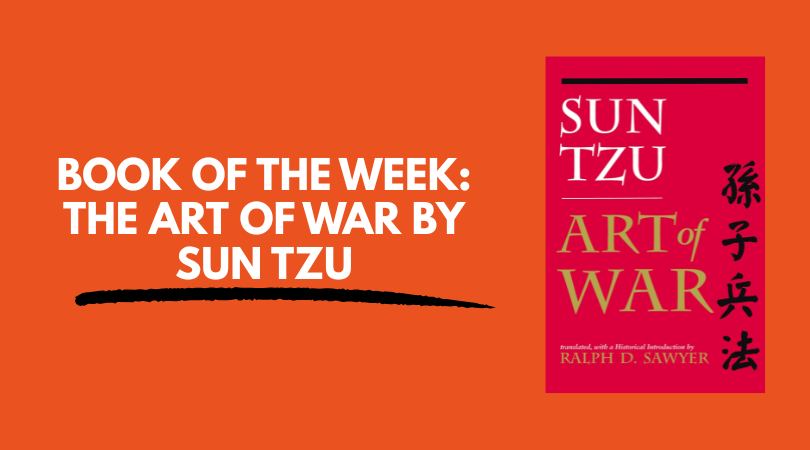
My dad had this book on his shelf.
I remember seeing it there as a kid. I remember watching him hold it. And I remember him speaking the words from its pages as we walked through fields and forests, or drove through the countryside. Most notably, Alaska. Wide open, unforgiving, extraordinary Alaska.
That is my first memory of The Art of War. Not a classroom. Not a business podcast. Not a recommendation from someone I follow online. My father’s hands. My father’s voice. A military man who carried these teachings the way he carried everything else, with purpose and without apology.
This book may have been more than a read for him. It may have been a tool. A survival guide. A compass. He was fighting to help save this country, and Sun Tzu was in his kit.
Growing up in a military home means you are exposed to things the average American never sees. A different way of thinking. A different level of awareness. A sharper understanding of terrain, of people, of risk. You learn early that the world is not always friendly, and that knowing your surroundings is not paranoia. It is preparation. It is survival.
That is the lens through which I have always seen this book.
Don’t Let the Title Fool You
Here is the truth about The Art of War. The title might be the biggest obstacle between you and one of the most important books ever written.
War. Most people hear that word and picture something that has nothing to do with their life. So they skip it. They leave it on the shelf. They miss everything.
This book is 232 pages. That is it. You could hold it in one hand. But do not let that fool you either, because this book contains more insight per page than most books ten times its size. The teachings are short. They are impactful. And they will sit with you.
They make you think. They make you wonder. And they deliver a kind of awareness that you carry with you for the rest of your life.
This is not a book you sit down and finish in one afternoon. It is not that kind of book. You read it passage by passage. One at a time. You reflect on each one. You let it land before you move to the next. Because they are all deep, and they are all meaningful, and rushing through them is like sprinting through a museum. You saw everything and understood nothing.
A Lesson in Life. A Teacher of Awareness.
Here is what I have learned from decades of returning to these pages: The Art of War is not really about war.
It is about awareness. Positioning. Knowing yourself and knowing your environment. Understanding when to move and when to be still. When to engage and when to let the situation resolve itself without your interference.
That applies everywhere.
It applies in business. I have never beaten a competitor by going at them head on. We outshine. Consistently. That consistency builds a reputation. That reputation builds armor that competitors cannot manufacture in a hurry. Sun Tzu without a sword.
It applies in leadership. My tenacity and my competitiveness are assets. They are also dangerous. When you are building a franchise and handing your playbook to people who are not you, pushing them past their limits too soon does not produce results. It produces damage. Knowing that about myself is the kind of self-awareness Sun Tzu spends chapters on. It is a gentle balance, and I am still working it.
It applies in preparation. Picture leaving the shop in the morning, skipping the equipment check because you’ve done it a thousand times. Fifteen minutes down the road, you reach for the one tool you need and it is not there. Now you are turning around, calling the customer, burning the schedule, and carrying a knot in your stomach that you put there yourself. All because you thought you were smarter than a two-minute checklist. The battle, Sun Tzu tells you, is won before it begins. That lesson hurts more when you have lived it.
It applies in the wilderness. Literally. If you are out there, in the forests and the fields, and you need to find the best place to rest. Or if there are eyes on you from within your own perimeter, and those eyes are not friendly. This book will help you. That is not a metaphor. My father knew that firsthand.
A Passage That Will Carry You
There are many lines in this book worth tattooing on your brain. Here is one of my favorites:
“The general who thoroughly understands the advantages that accompany variation of tactics knows how to handle his troops.”
Read that slowly. The leader who can adapt, who does not have one move and one move only, who reads the situation and shifts, that is the leader who wins. And that is the operator who builds something that lasts.
Rigid systems break. Adaptable ones bend and return.
Golden Squeegees: 5 out of 5

There are books I have finished and felt satisfied. And there is The Art of War, which I have never really finished at all.
I have been in a relationship with this book since before I was old enough to understand what I was seeing. My father’s copy. His voice in the countryside. The lessons that found their way into my bones long before I ever ran a business or built a brand. This book is woven into who I am.
A five Golden Squeegee rating is rare around here. It means the book is not just good. It means it has earned a permanent seat at the table. It means you return to it. It means it gives more every time you open it.
The Art of War earns that. All day. No debate.
If you have not picked this one up, I am telling you now: go get it. Read it slowly. One passage at a time. Reflect on each one. And give it the attention it deserves.
It is one of my all-time favorites. And it just might change your life the way it has changed mine.
Follow my journey at gabesalinas.com, subscribe on Substack, and connect with me on social media.
Keep Shining
Gabe Salinas
The World’s Greatest Window Cleaner
Founder, Window Ninjas | gabesalinas.com
