
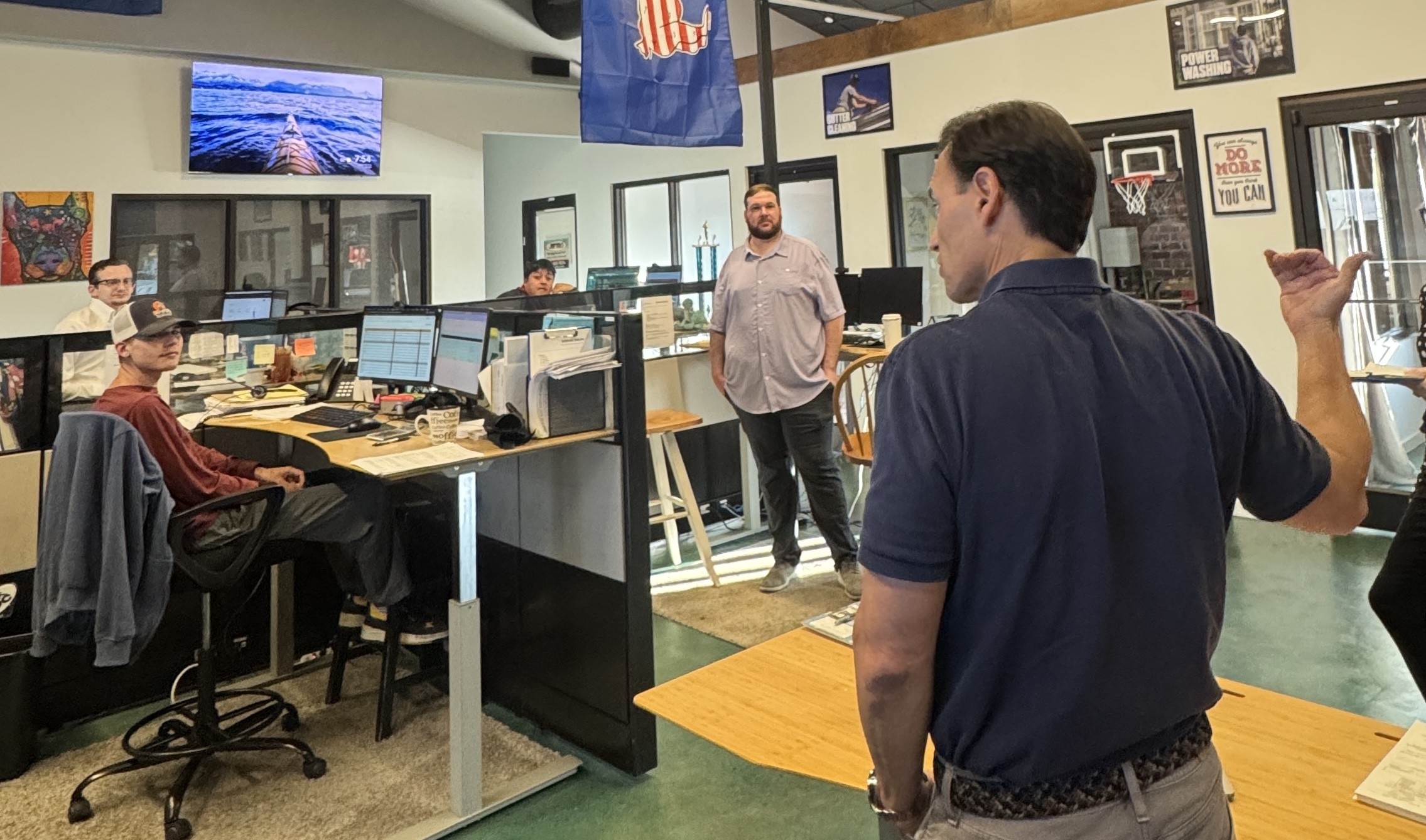
There is a sentence I can say out loud that makes my entire team move faster than a cheetah chasing an antelope.
Here it is. “Guys, I’m gonna have to shut things down for the next two days if we don’t get this fixed and working the way it’s supposed to.”
That’s it. That’s the whole spell. I have watched grown adults who were dragging their feet all morning suddenly find another gear. Phones come out. People start solving. The thing that was “gonna get handled eventually” gets handled in about forty minutes.
Now, I don’t say it to scare anybody. I say it because I mean it. If something is broken in my business, something that is not running the way my system says it should run, I will close the doors and send people home before I let it keep going. I’ve done it. It is not a threat. It is a standard.
I call it the flat tire standard. And I want to walk you through it, because I think it might be the single most valuable habit I’ve built in thirty years of running this company.
You already know this feeling
Let Me Guess How Your Week Is Going.
Something small broke. A little thing. Maybe a piece of equipment is acting up. Maybe one step in your process is getting skipped. Maybe a customer got handled in a way that wasn’t quite right, and you noticed, and a little voice in your head said “we should fix that.”
And then you kept going. Because you’re busy. Because it’s peak season. Because stopping to fix one small thing feels like it costs you a whole day you don’t have.
I get it. I really do. When you’ve got trucks to run and a schedule that’s already tight, the last thing you want to do is pump the brakes over something that seems minor.
But here’s the thing nobody tells you when you start a business. It is almost never the big dramatic disaster that takes you down. It’s the little thing you drove right past.
What A Flat Tire Actually Teaches You:
Think about a real flat tire for a second.
You’re on the highway. You feel that thump, thump, thump. What do you do? You don’t keep driving to your destination and deal with it when you get there. You can’t. The whole trip stops until that tire gets fixed. Your attention has no choice. It goes straight to the problem, because you physically cannot get where you’re going until it’s handled.
That’s the standard. Stop what you’re doing and fix your tire now, because nothing else you were trying to do matters until it’s fixed.
A business works the exact same way. The only difference is that a business flat tire doesn’t always thump loud enough for you to feel it. So you keep driving. And that’s where people get destroyed.
It’s always the little thing that takes down the mountain. A small leak in your roof, ignored long enough, will destroy the entire house. Not the storm. The leak. The little drip you kept meaning to get to.
I have seen good businesses fall apart, and it’s almost never one giant mistake. It’s a hundred tiny flats nobody stopped to fix, all rolling at once, until the whole thing comes apart on the side of the road.
The Part Almost Nobody Figures Out
Here’s the flip. This is the part I want you to really sit with.
Most people think the flat tire standard is about the fixing. Stop, patch it, move on. And yeah, that’s part of it.
But the real power isn’t the fix. It’s that having a standard is the only reason you can see the flat tire in the first place.
Follow me here. A guy with no system, no process, no standard, he can’t spot the small leak. He’s got no idea what “normal” is even supposed to look like, so the little things slide right past him. He doesn’t notice the skipped step, because he never decided what the steps were. He doesn’t catch the tire going soft, because he was never paying attention to the road in the first place.
Your standard is your eyes. It’s the thing that lets you notice the drip while it’s still a drip, back when fixing it costs you ten dollars, instead of noticing when the ceiling is already on the floor.
That’s why I’m so protective of my system. Not because I love rules for the sake of rules. Because the system is what lets me catch the small thing early, while it’s still cheap.
So How Do You Actually Run This
Alright, let’s get practical. Walking next to you now, here’s how the flat tire standard actually works day to day.
Follow the process. You built the system for a reason. When your team runs it the way it’s designed, the results are predictable and the small problems show up loud and early. Don’t freelance. Don’t let people invent their own version on the fly, because the second everybody’s doing it their own way, you’ve got no baseline left, and your eyes go blind.
When something breaks, stop. Right then. Not at the end of the day, not next week. The whole reason the standard works is speed. A flat tire caught in the first mile is a twenty-minute fix. A flat tire you rode on for fifty miles just cost you a rim, an axle, and your afternoon.
Here’s the one exception, and it matters. Following the process does not mean you can never change it. If you or someone on your team spots a genuinely better way to do something, a way that makes the system cleaner or faster or smoother, you change it. But understand what that is. That’s not deviating from the standard. That’s upgrading it. You’re not driving on the flat. You’re building a better tire. Big difference.
Deviating is when things break down and nobody fixes them. Improving is when you make the whole thing run better on purpose. One is a leak. The other is a renovation. Learn to tell them apart.
Why This is Really About Worth
I’ll be straight with you about why I care so much about this, and why I’m handing it to you.
When you hold a flat tire standard, you’re telling everyone around you that the work is worth doing right. That’s worth before net worth in action. You’re not shutting down the company over a small problem because you’re cheap or controlling. You’re doing it because you refuse to hand a customer something that isn’t up to the bar you set for yourself.
And people feel that. Your team feels it, which is exactly why they move like cheetahs when I say the word. Your customers feel it too, even when they can’t name it. They just know that when your people show up, the little things are handled, and that peace of mind is the rarest thing you can sell.
You Can Start This Today
You don’t need a thirty-year-old company to run this standard. You need it more if you’re just starting out, because the small flats you fix now are the disasters you’ll never have to survive later.
So here’s your move this week. Find your flat tire. You already know what it is. It’s that one small thing you’ve been driving past, telling yourself you’ll get to it. The skipped step. The soft spot. The little drip in the corner.
Stop. Fix it now, while it’s still a ten-dollar problem.
Then watch what happens. Watch your people move faster. Watch the mountain stop crumbling. Watch the house stay standing.
That’s the flat tire standard. It’s not about being hard on everybody. It’s about caring enough to stop the whole world for the small thing, because you already know the truth that most people learn too late.
The little things are never little.
